kapa kulture

This blog is dedicated to Hawaiian kapa and matters related to Hawai'i nei…kuku kapa e!

HALE KAPA, or Kapa House in English

New gallery shop opened in Lihu’e on Kaua’i, Hawai’i. It is a home for the Kapa Revival Project, a place to hold classes and workshops in the Hawaiian arts, especially kapa arts, and a place to see kapa on display and purchase tools for kapa making. There are also a number of beautiful island-style items for sale. Right now there are Christmas ornaments made with kapa and stamped with ‘ohe kapala, bamboo stamps in traditional Hawaiian motifs.

2981 Kalena Street, Lihu’e, HI. 96766

Check out the new Hale Kapa website

Makahiki Time!

Makahiki is one of the most important seasons in the Hawaiian calendar. Coinciding with the rising of Makaliʻi (the Pleiades constellation) in the night sky, this four-month event marks the journey of the akua Lono around the Hawaiian Islands — bringing peace, harvest, and fertility. In past generations, it was a time for the people to rest from working the land and to refrain from war.During Makahiki, an embodiment of Lono, called an akua loa or Lonomakua, is adorned with his kino lau (body forms). Customarily, these include pala ferns (Marattia douglasii) and the pelts of native albatrosses, such as kaʻupu (Phoebastria nigripes) or mōlī (Phoebastria immutabilis). Alongside the black and white albatross feathers, white kapa banners are draped over the akua loa, since these colors are associated with Lono.Here at Bishop Museum, we recognize Makahiki and the winter months of our year with the display seen in the photo. To the left stands an image of Kū, ceremonially wrapped to mark the shift between Kau (or Kauwela), the dry season of Kū, and Hoʻoilo, the rainy season of Lono. At the center of the display, adorned with symbolic greenery and feather lei appropriate for an island circuit, is a kiʻi understood to be the only remaining akua loa to have been used in Makahiki circuits made by high chiefs in the 1800s, most likely on Hawaiʻi Island.Visit Bishop Museum today to see this special symbol of Hawaiian culture, and hundreds of other cultural items and natural history specimens on display in our galleries.“The Signs of Makahiki” is written by Marques Hanalei Marzan, Miles Thomas, and Emma Bornstein. Read the full story and explore more.

Drawing of Lonomakua by Joseph Feher, Bishop Museum Archives. SCP 54161.Bishop Museum is the State of Hawaiʻi Museum of Natural and Cultural History.

#BishopMuseumEthnology#ethnology #culture #art#BishopMuseum #HawaiisMuseum

Tatau

Bark Cloth of Aotearoa and Rapa Nui ~ New Zealand and Easter Island

The word “Polynesia” comes from two Greek root words “poly” which means many, and “nesos”, or nesia, which translates as islands.  Therefore, Many Islands is the meaning of Polynesia.  The island nation of Aotearoa, also called New Zealand, is located in the western region of the South Pacific Ocean. Rapa Nui, also called Easter Island, is located off the coast of Chile,  in the eastern South Pacific.  Aotearoa and Rapa Nui make up the base of the Polynesian Triangle, which has the Hawaiian Islands at the northern apex.  All the islands within the borders of the Polynesian Triangle are considered part of Polynesia.

Map_Polynesia

In Aotearoa, aute is the name given to the paper mulberry tree and the beaten cloth.  What evidence do we have to tell the story about aute from Aotearoa?  Well, historians and archaeologists have been able to piece together some important facts from the very little material remains of aute by the Maori people.  Firstly, aute is mentioned in Maori oral histories.  In particular, the kite of the demi-god Maui.  It is believed that the paper mulberry tree was brought on the canoes of Polynesian ancestors and was cultivated on aute plantations up until the 1840’s.   According to historical documents, Captain Cook was shown a highly valued plantation of aute trees in 1769.  The impact of European contact and cattle farming are causes that led to the final extinction of Maori aute plantations.   However, evidence indeed proves that aute was used for wrapping religious god images and protecting valuables; as seen in the finished pieces found hidden in ancient dry caves.  Furthermore, some worn aute beaters have been recovered in swamps and these are estimated to be several hundred years old. Apart from this evidence, not much of material remnant has been found of the aute of Aotearoa.

There is less information available about the production of bark cloth in Rapa Nui. Even so, several figurines and artifacts that have been found.  These are either completely made of tapa cloth or dressed in tapa cloth. Some are said to be god images, they have a fierce expression and are in a seated position with arms bent (Peabody Museum).


tapa figure_human effigy_Easter Island artifact @ Peabody Museum, Harvard

Rapa nui figurine-Painted Tapa Cloth -Peabody Museum of Archaeology and Ethnology- Harvard University, Oceania Collection

headband_rapa nui

Rapa Nui Headband-Peabody Museum of Archaeology and Ethnology-Harvard University


Ka māla i ka pā hale

wauke forest

Hau’oli Makahiki Hou! Happy New Year, Happy New Hohoa!

new hohoa

These five hohoa were made in record time!  Imua!

The onset of this new year makes my heart feel glad and appreciative.  I am thankful for my ‘ohana (family).  They continuously help me with the actual work of making my mea kapa.

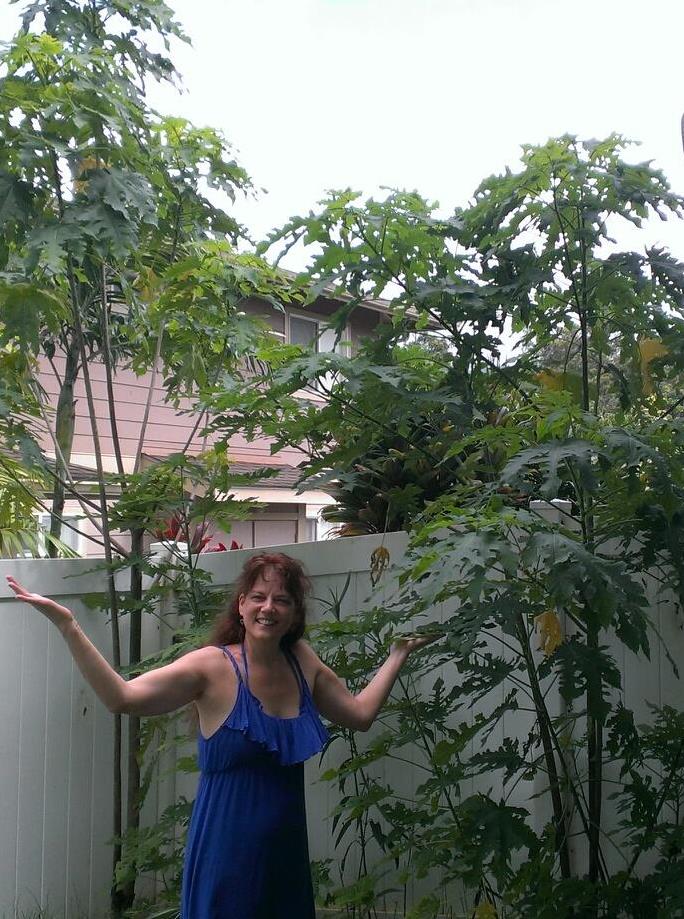
This new year my kuleana (responsibility) will continue to involve haumana (students) in kapa-making.  We are building a mala garden that will feature these kapa plants: wauke, noni, kukui, olena, ‘uki’uki, ma’o, and ilie’e….

I was awarded the David Boynton Educational Grant.  This is a local grant that was established and named in honor of the late David Boynton.  I am so grateful for these funds. We will be purchasing the garden tools and supplies we need for the Kapa Garden Project!  Mahalos


I kū mau mau!

096

The Beauty of Mauna Kea

Ua mau ke ea o ka ʻāina i ka pono, life of the land is preserved in righteousness….

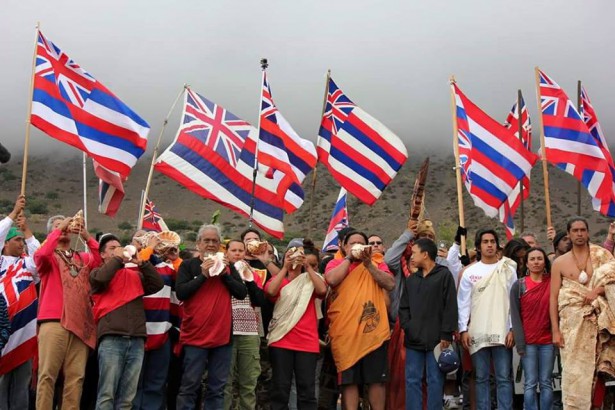
Although Mauna Kea has been under siege, people care.  Technology is not a bad thing in and of itself, but the infrastructure needed to accommodate the humongous telescopes is detrimental to the natural and spiritual health of this most beautiful place.   If the need for infrastructure increases, then the situation will only become worse.  Electromagnetism is another concern and this kind of pollution is only now coming into public knowledge. E ola pono me ke malama pono kākou.  i kū mau mau!

http://wagingnonviolence.org/feature/hawaiis-mauna-kea-protectors-aim-to-halt-tmt-construction-on-sacred-mountain/

http://www.bigislandvideonews.com/2015/10/22/mauna-kea-update-october-22-2015

11182223_1564415233822521_2941821986066975327_n-615x410

Kīlauea Volcano’s summit eruption in Halema‘uma‘u Crater turns 7 soon

HAVO Public Affairs Specialist's avatarPacific Island National Parks

The following is an excerpt from this week’s edition of the USGS Hawaiian Volcano Observatory‘s Volcano Watch, with tips on viewing the Halema‘uma‘u eruption within Hawai‘i Volcanoes National Park provided by park rangers.  

The lava lake within Halema‘uma‘u Crater at the summit of Kīlauea on February 1, 2014. USGS Photo. The lava lake within Halema‘uma‘u Crater at the summit of Kīlauea on February 1, 2014. USGS Photo.

While Kīlauea Volcano’s East Rift Zone eruption at Pu‘u ‘Ō‘ō has been making headlines with the June 27th lava flow and its hazards, Kīlauea’s summit eruption within Halema‘uma‘u Crater has steadily continued in the absence of much press. However, the lack of media attention does not reflect on the eruption’s remarkable nature.

Kīlauea’s ongoing summit eruption began on March 19, 2008, after several months of increasing seismic tremor and gas emissions. A small “throat clearing” explosion opened a new crater (informally called the Overlook crater, because it is located immediately below the former National Park visitor overlook) on…

View original post 884 more words

Mauna Loa: Quiet for Many Years, But Not to be Forgotten

Pacific Island Ranger's avatarPacific Island National Parks

ʻAʻā lava flows erupt from the Northeast Rift Zone of Mauna Loa on March 25, 1984—the first day of the volcano’s most recent eruption. (USGS photo.)

The following is this week’s edition of the USGS Hawaiian Volcano Observatory‘s Volcano Watch:

Over the past few months, Mauna Loa, Hawaiʻi Island’s largest volcano, has shown subtle signs of stirring from its 31-year-long slumber (its most recent eruption began on March 25, 1984). The U.S. Geological Survey’s Hawaiian Volcano Observatory (HVO) has recorded numerous small earthquakes beneath Mauna Loa’s summit and western flank, and has detected slight expansion across Mokuʻāweoweo, the volcano’s summit caldera—signals that Mauna Loa should not be forgotten!

What can we expect as this great volcano reawakens and builds toward its next eruption?

Generally, as magma rises and eventually infiltrates and fills Mauna Loa’s summit magma reservoir, pressure builds within the volcano. When sufficient pressure is achieved, the volcano expands…

View original post 603 more words

Post Navigation